Do Plugs Need TIS? A Guide to TIS for Plugs, Sockets and Extension Cords Before You Import
“Plug” covers several products — plugs, wall sockets and extension cords — and each falls under a different TIS standard. Importing without checking first can mean goods that fail customs clearance, storage fees, return shipping costs and lost time.
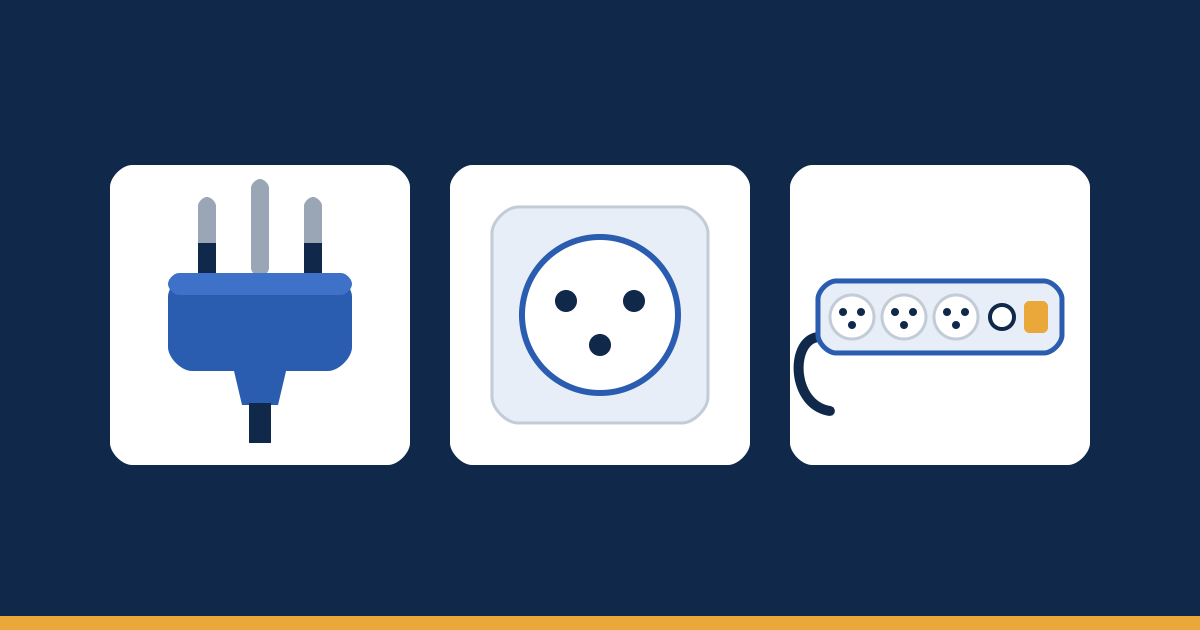
This article introduces the two main TIS standards for plugs and sockets, what they cover, and what importers should know before deciding to order.
Do plugs and sockets need TIS?
It depends on the type of product. There are two main mandatory TIS standards:
| Product | Standard | Scope (summary) |
|---|---|---|
| Plugs and socket-outlets | TIS 166-2549 | AC, rated voltage up to 250 V, rated current up to 16 A, for household and similar use |
| Extension cords (cord extension sets) | TIS 2432-2555 | AC, rated voltage above 50 V and up to 440 V, rated current up to 16 A, for household and similar use |
New to mandatory TIS? Start with What is TIS? If you already have a product in mind, try the online TIS check.
What is TIS 166-2549?
TIS 166-2549 is the standard for plugs and socket-outlets, both fixed and portable, for household and similar use, indoors and outdoors. It has been mandatory since 11 November 2020.
What importers should know:
- It also covers plugs and sockets built into other products, such as plugs moulded onto cords, the plug and outlets of extension cords, and plugs on electrical appliances, unless the appliance's own standard says otherwise
- Old licenses ended: licenses issued when this was still a voluntary standard are no longer valid, so a new license under the mandatory standard is needed
- Sockets come in two-pole with earth types only, as listed in the standard's tables
- Visible safety requirements, for example live pins must have insulating sleeves, and sockets must prevent a plug from being inserted into one pole only
- Licenses are issued per model: importing a new model means applying to add it
Do extension cords need TIS?
Look at TIS 2432-2555, which covers cord extension sets: a plug, a flexible cord and socket-outlets combined into one product, both rewirable and non-rewirable, including cable reels used as extension cords. It has been mandatory since 24 February 2018.
Requirements to check with your factory before ordering production:
- Extension cords with 3 or more outlets must have overcurrent protection, and fuses are not allowed
- Outlets must have shutters and an earth terminal connected to the plug
- Maximum power must be marked in watts together with the word MAX
- Licenses are detailed, covering items such as cord length, overcurrent protection and extra features like USB. Making the cord longer than licensed, or adding features later, requires a license amendment
Does the cord in an extension set need TIS?
Under TIS 2432-2555, the cord in an extension set is a flexible cord and must comply with TIS 11 or TIS 955. The plug and outlets in the extension cord must comply with TIS 166.
The standard also sets minimum cord sizes and maximum lengths. For example, a 16 A extension cord with a cord longer than 2 metres must use cable of 1.5 square millimetres or more.
Be careful: TIS 11 has several parts. TIS 11 Part 3, for example, covers single-core cable for fixed installation, not the flexible cord used in extension sets. Each type of cable has to be matched to the right part.
Which plugs and sockets are not covered by these two standards?
Both standards list products that are outside their scope, for example:
- Plugs, socket-outlets and couplers for industrial purposes
- Appliance couplers
- Extra-low-voltage (ELV) plugs and sockets
- Fixed socket-outlets with built-in fuses or automatic switches
- Extension cords with automatic cord-rewind devices
These products are not covered by TIS 166 or TIS 2432, but that doesn't mean they skip licensing. They may fall under another standard and need to be checked case by case.
Cases the standards alone can't answer
- Flat-pin plugs: the table in the TIS 166 specific criteria lists round-pin plugs only
- Extension cords with USB, or smart plugs: the standard requires add-on devices to meet their own standards, but the documents we have don't say whether another license is also needed
- Ready-made extension cords: whether the plug and outlets need a separate TIS 166 license
- Plug adaptors without a cord: whether they count as a cord extension set or a portable socket-outlet
These cases need to be checked one by one. Send us your product details.
What should importers prepare?
For products covered by either standard, here is what to know before ordering production:
- No one-time import permits: the specific criteria of both standards say so, so importers need a regular license
- Test samples: both standards take 1 set of 21 units for each type applied for. For extension cords, the sample is the highest-power, longest-cord version applied for
- Factory quality control: a factory assessment report by TISI or an inspection body, or a Letter of Conformance from a factory that is already registered
- The TIS mark: extension cords must carry the mark on the product, at least 10 mm in size, with a QR code. For plugs and sockets, the criteria recommend a size and position. The application must include a sample of the marking and where it will appear
See more about documents and sending samples for several models in our FAQ.
How do you know which TIS standard your plug needs?
In short: plugs and sockets fall under TIS 166-2549, extension cords under TIS 2432-2555, and the cord in an extension set must meet the flexible-cord standards. Products with USB, other pin types or special functions should be checked by an expert before you order.
Do a quick first check with the online TIS check, or send us the details. You don't need to know standards terminology first — just tell us what the product is.
- The initial requirements check takes 1–2 days
- We confirm the scope of work and fees before we start
- We tell you the real result, whether or not your product is covered
Good to know
The examples in this article do not mean every plug or socket needs TIS. Check your product's details directly. Read more articles about TIS.
Not sure what your product needs?
Send us your product details and we'll help you work out where to start.